Prologue
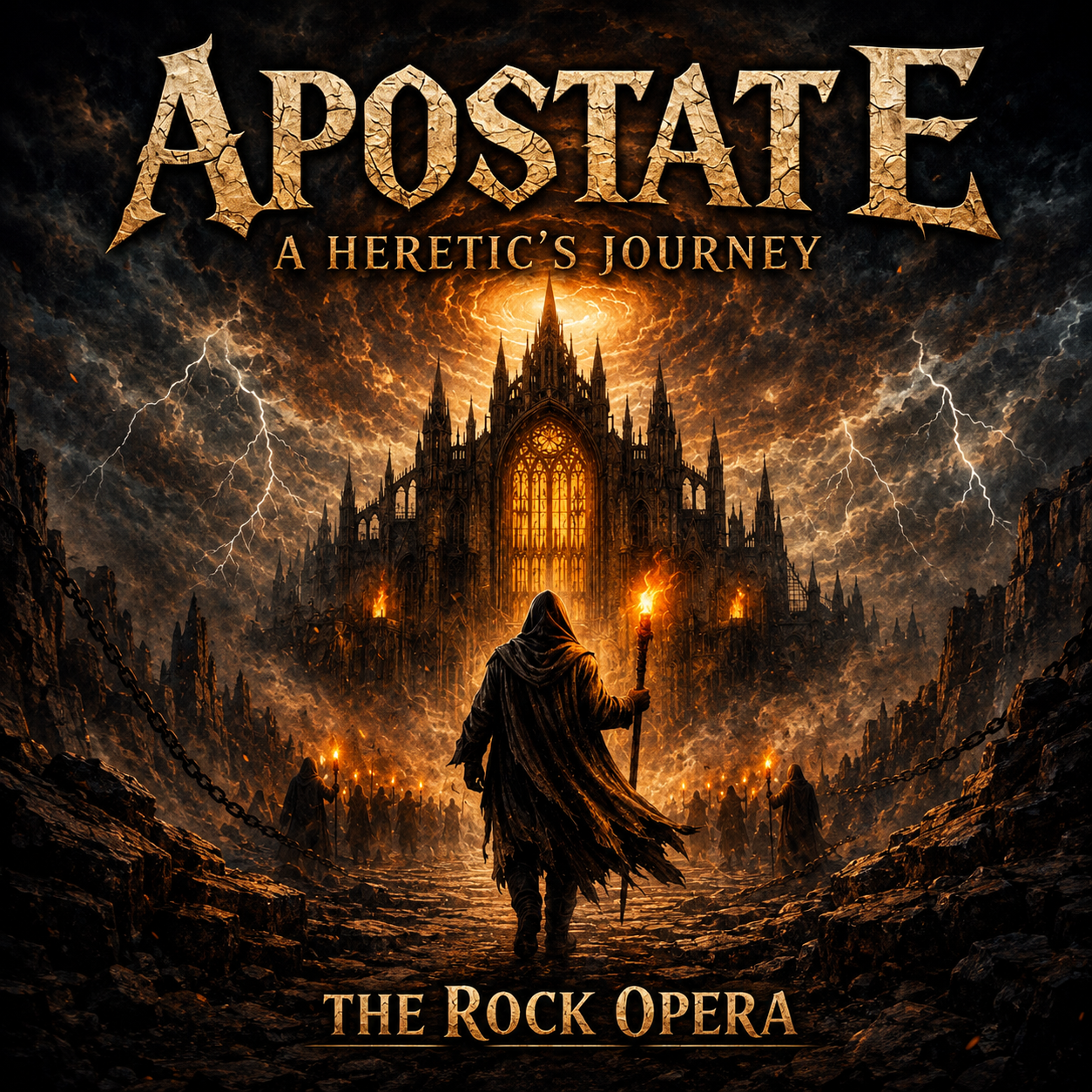
I never imagined questions would make me an outsider. But once doubt entered, I could no longer pretend certainty. Every answer opened a door; every door led farther from the faith I knew. This is where my journey begins—not with rebellion, but with honesty, fear, and courage to ask why.
Act I — The Questions Begin
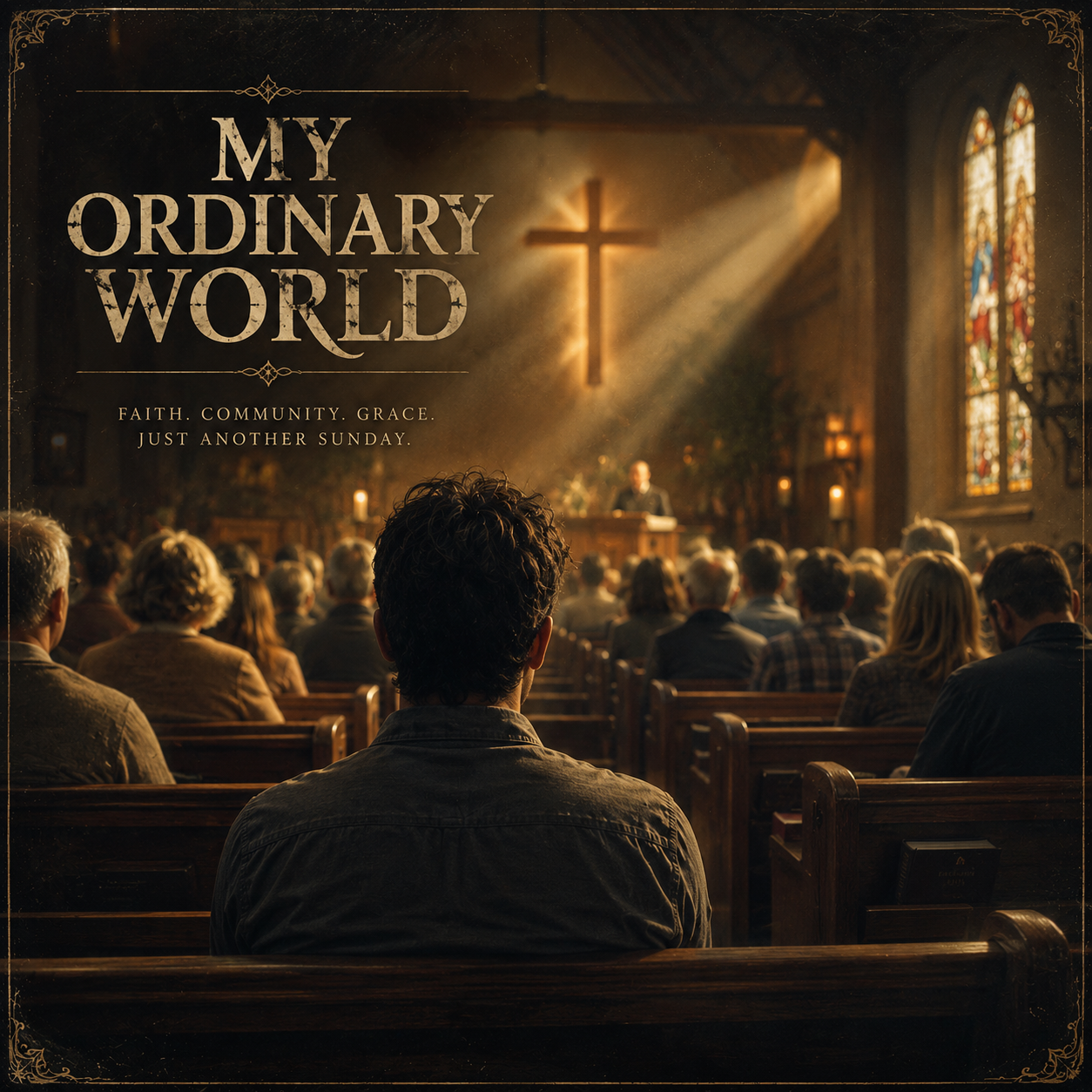
My world once felt certain. I knew where I belonged, what I believed, and which answers I was allowed to trust. Faith surrounded me like familiar walls—comforting, steady, unquestioned. But beneath the ordinary rhythm of my life, a quiet restlessness was growing. Something inside me had begun to awaken.

Once again, I’ve fallen short of the person I hoped to be. I spoke too quickly, chose too poorly, and hurt someone I love. Shame tells me I’ll never change, but grace invites me to begin again. Maybe failure isn’t the end—maybe it’s where forgiveness opens another door forward.

For years, I accepted the beliefs handed to me, trusting others to define truth, morality, and meaning. But growing up means examining what I believe and taking responsibility for the life I choose. It is time to release borrowed certainty, face difficult questions, and finally put childish things behind me.
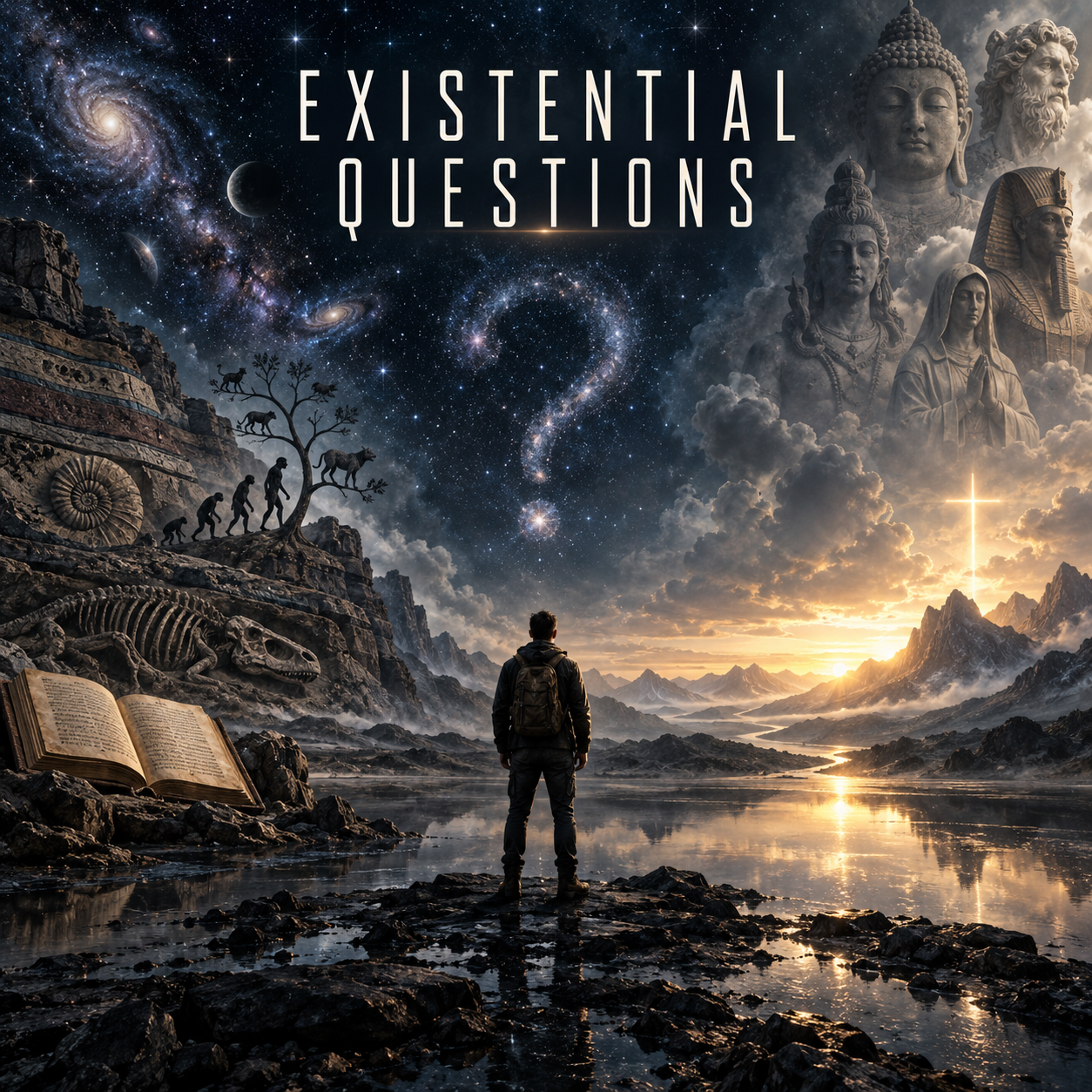
I begin questioning everything I once accepted: an ancient or evolving Earth, scripture or human story, creation or natural selection. I wrestle with suffering, hiddenness, hell, religious experience, and competing gods. Beneath every question lies one urgent search: what is true, who was Jesus, and am I deluded or awakening?
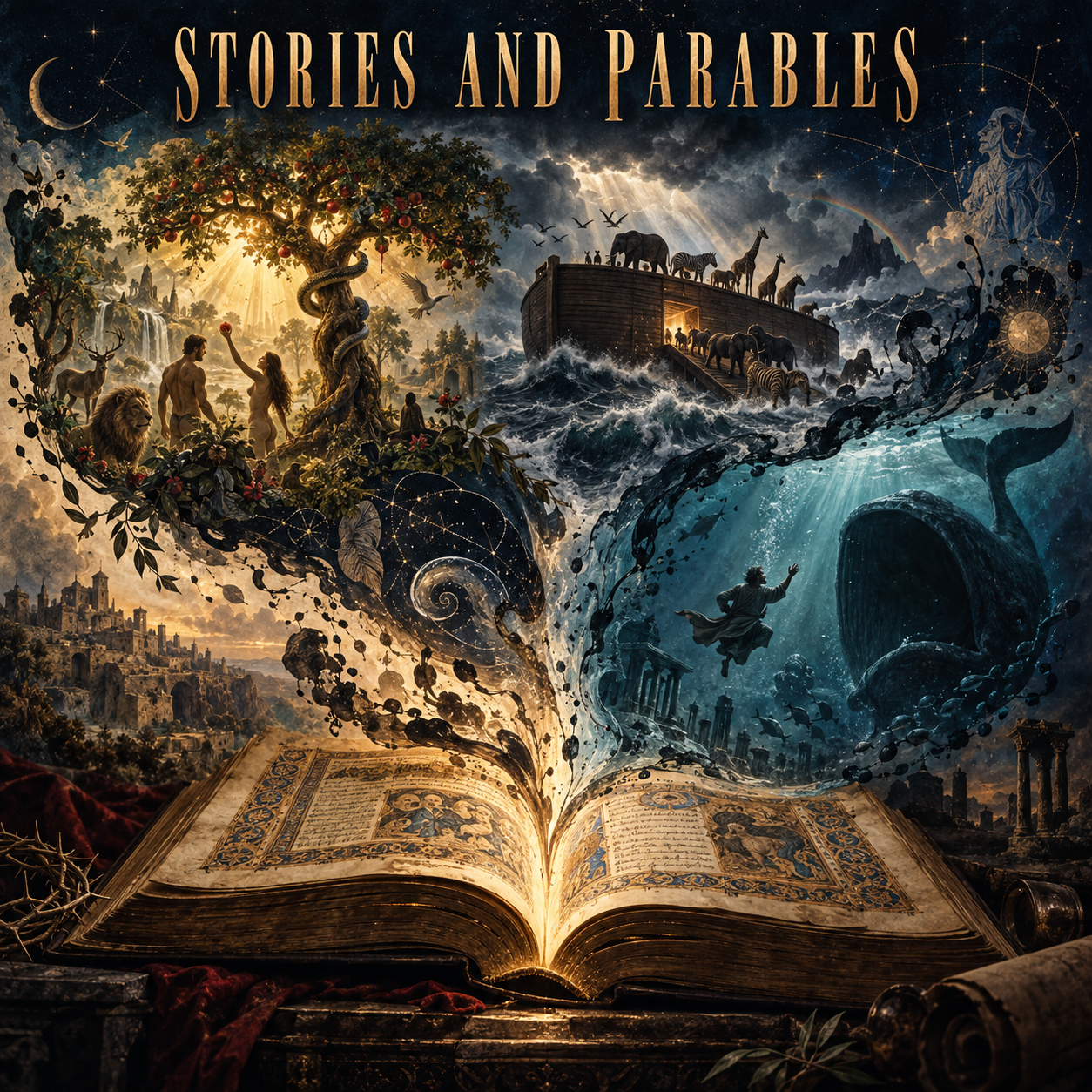
I explore the Bible’s unforgettable stories and parables, asking whether they were meant as literal history or symbolic wisdom. Eden, Noah’s Ark, and Jonah may be “true lies”—imagined tales carrying deeper truths. I wonder why adults insist on facts when metaphor may hold the greater meaning for us all.
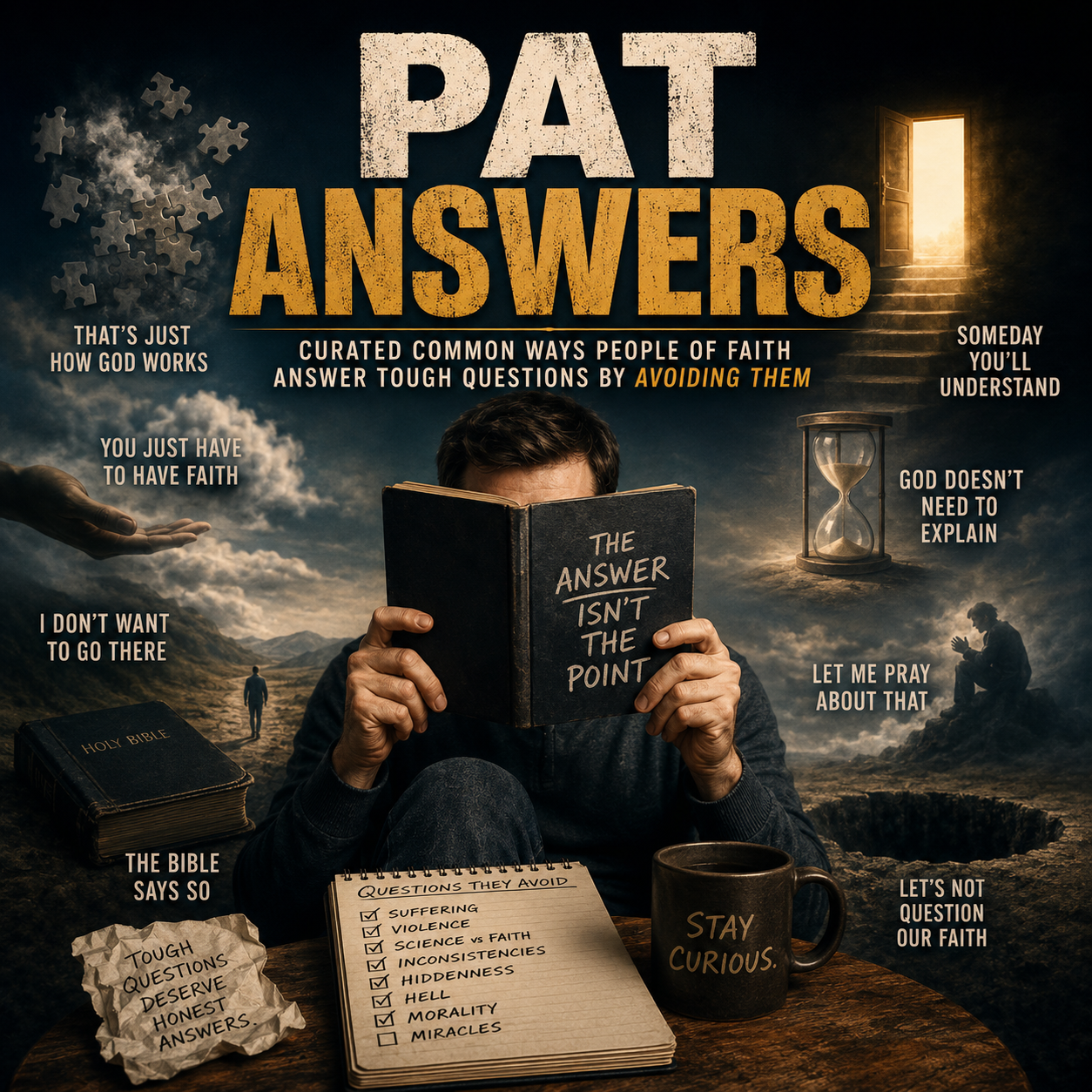
Whenever I asked a difficult question, someone offered an easy answer: God has a plan, just have faith, don’t lean on your understanding. The words sounded comforting, but never reached the ache beneath my questions. I wasn’t looking for reassurance. I wanted honesty—something deeper than an answer wrapped in certainty.
My faith once felt like a shelter built on unshakable stone. Then questions appeared—small at first, easy to ignore. But each doubt widened the cracks, letting light shine through. I tried to repair what was breaking, afraid the whole structure might fall. Instead, I began to see beyond it.

I once believed belonging meant believing the same things and never asking questions that might disturb the peace. Community gave me comfort, identity, and a place to stand—but also taught me to fear the road beyond its walls. Can I question, think for myself, and still belong?

I used to pray for answers that would strengthen what I already believed. Now I pray for wisdom—the courage to question, the humility to listen, and the strength to follow truth wherever it leads. If God is real, honest inquiry cannot threaten Him. So I humbly ask for clarity.
Act II — The Deconstruction

I set out seeking truth, not reassurance, determined to follow evidence wherever it leads. I question inherited beliefs, test comforting assumptions, and listen beyond my tribe. The journey costs certainty, belonging, and familiar answers, yet honesty matters more. I may never know everything, but I refuse to stop searching honestly.

I discover that life is bigger than any creed I inherited or abandoned. Wonder, love, meaning, beauty, and belonging do not disappear when certainty does. Beyond labels of believer and unbeliever, I embrace our shared humanity. My questions remain, but my world expands when truth matters more than defending belief.
I once saw nature’s complexity as proof of a divine Watchmaker: design required a designer. But evolution reveals how simple processes, variation, selection, and immense time can create astonishing complexity without foresight. I still feel wonder, yet no longer assume that every intricate feature must have been intentionally designed beforehand.

I confront the ancient claim that everything must have a cause and therefore God began it all. But if God needs no creator, why must the universe? I follow the chain backward, questioning whether naming a First Mover truly explains existence—or merely gives mystery another name to worship blindly.
I marvel that the universe’s constants seem precisely balanced for stars, planets, and life. Is this evidence of divine design, countless universes, necessity, or chance? I feel the argument’s emotional power, yet resist declaring victory too soon. Wonder invites investigation, but mystery alone does not prove who tuned the cosmos.
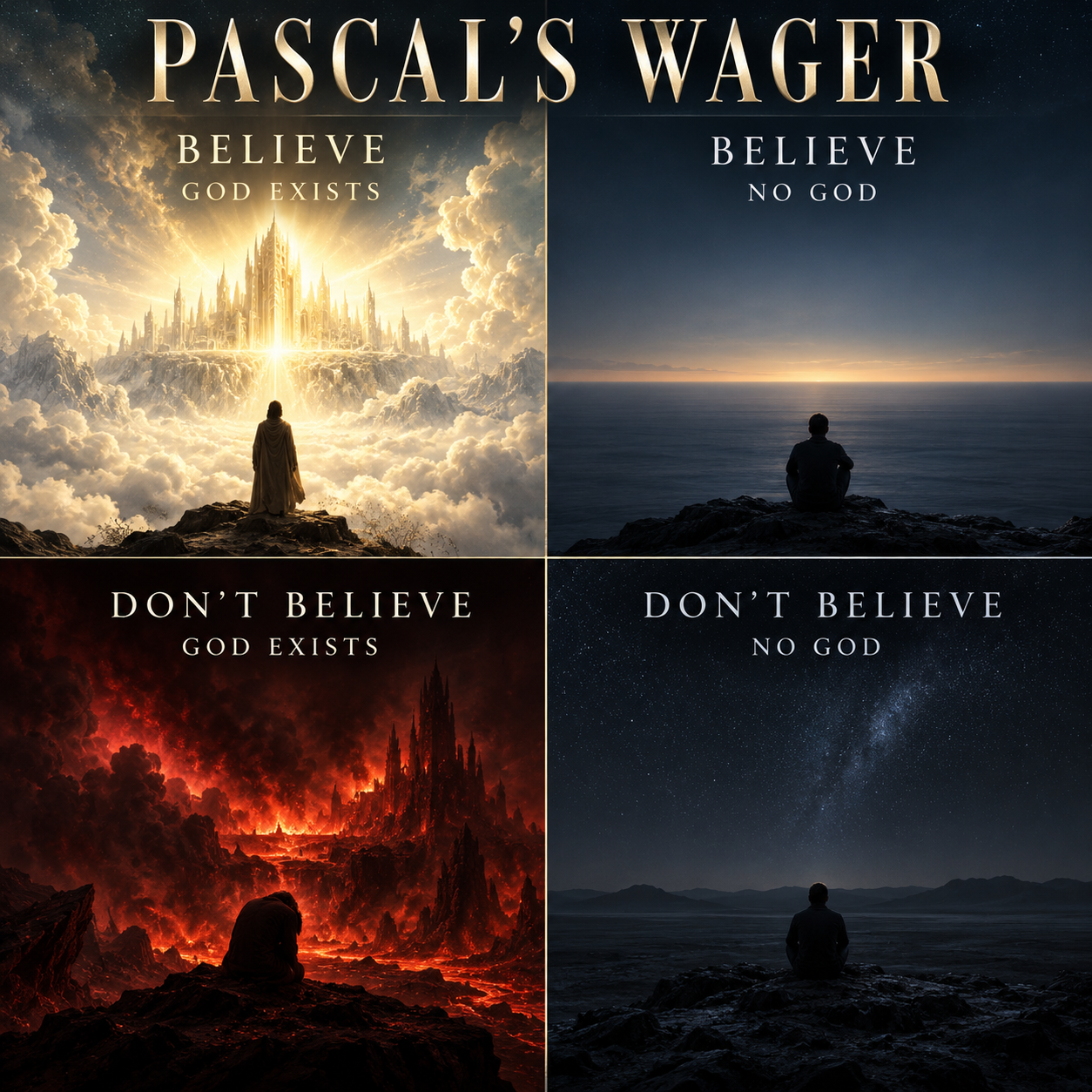
I consider Pascal’s Wager: believe in God and risk little; disbelieve and risk eternity. But belief is not a switch I can flip for safety, and which god should I choose? Fear cannot manufacture conviction. I would rather seek truth honestly than gamble my integrity for a promised reward afterward.
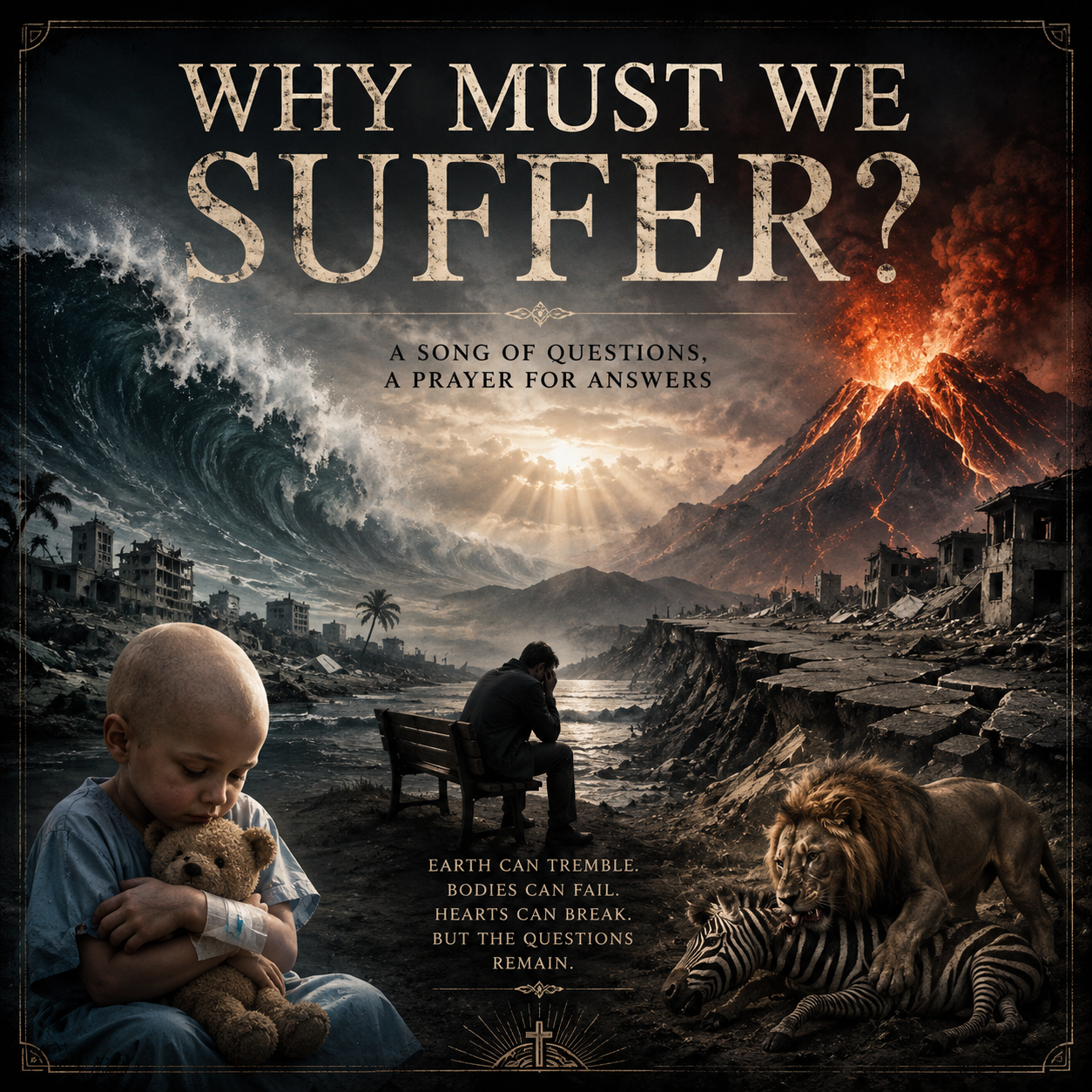
I was taught that God is loving, powerful, and always near. Yet suffering surrounds us: children hurt, families grieve, and innocent lives are shattered without reason. I search for meaning in the silence, but easy answers no longer satisfy me. If God can stop the pain, why doesn’t He intervene?

I have searched for God in churches, scriptures, prayers, and the quiet corners of my own heart. Others speak of His presence as certainty, but I keep meeting silence. If He longs to be known, why does He remain hidden? God, I am still looking. Where are You hiding now?

Some books of the Bible trouble me. They contain stories and commands that appear to condone genocide, slavery, and misogyny—words that conflict with everything I imagine a loving Creator to be. I want to call them divine, but their cruelty feels painfully human. These are books I’d rather ignore.

I was taught that rejecting God could mean endless suffering—a punishment without mercy, without purpose, without end. The fear followed me for years. But now I must ask: could a loving Creator condemn finite human beings to infinite pain? If this is justice, why does it feel so cruel?
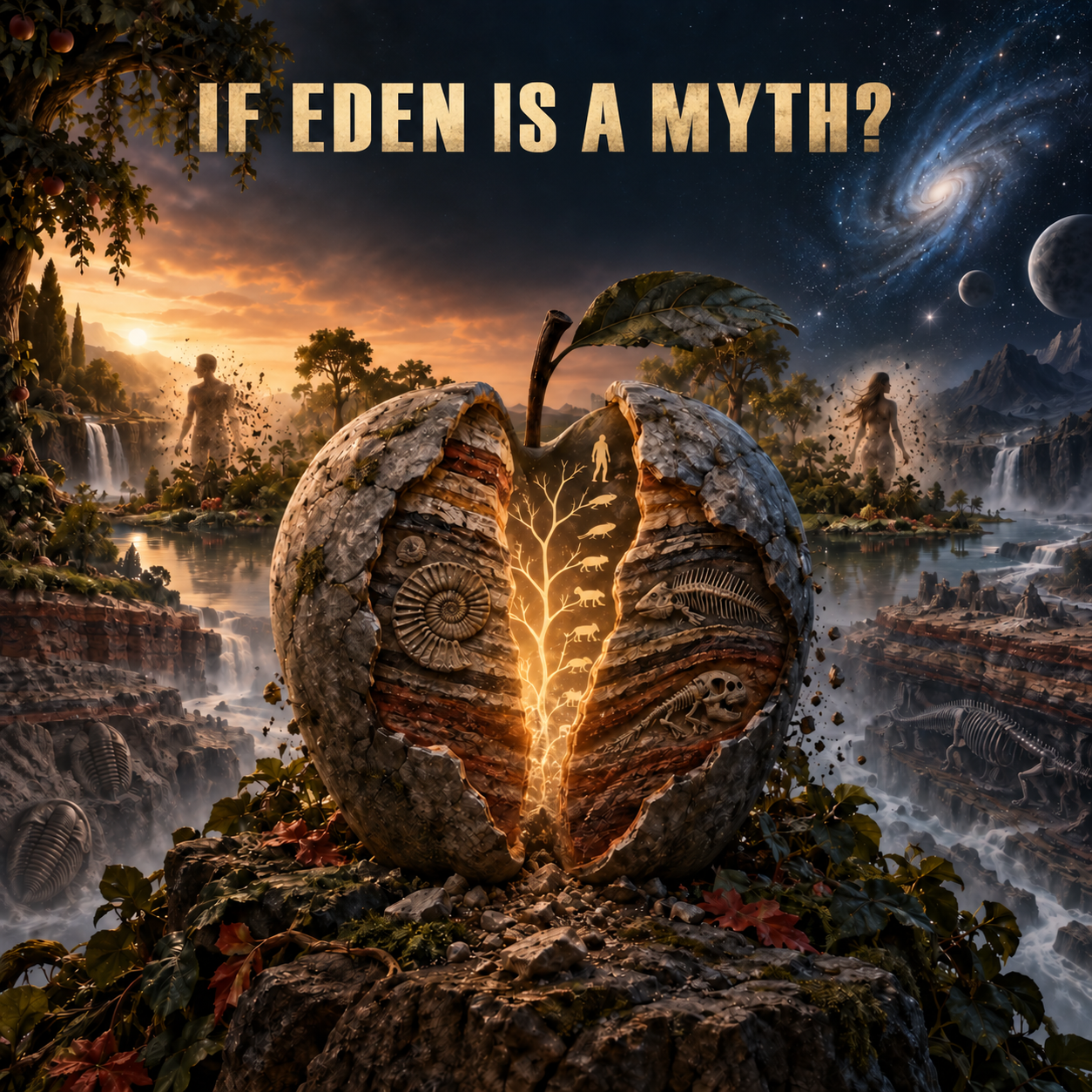
I question what remains of Christianity if Eden was never literal history. If Earth is ancient, humans evolved, and Adam and Eve never fell, then where did original sin begin? Without that inherited guilt, why would humanity require a divine sacrifice? If Eden is myth, the entire salvation story changes.
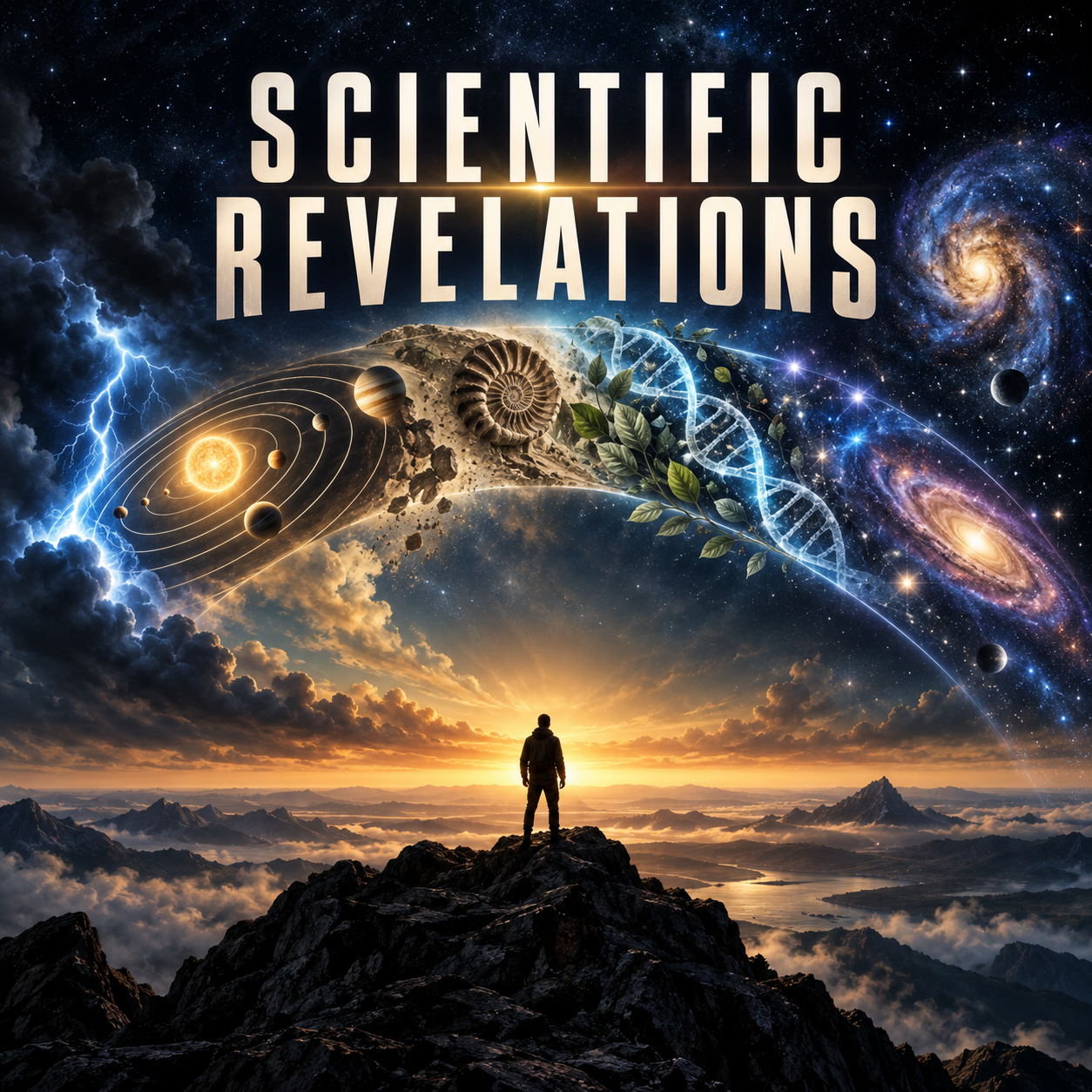
I stand amazed by discoveries that transformed humanity: a moving Earth, deep time, evolution, germ theory, relativity, quantum physics, DNA, and an expanding universe. Science repeatedly overturns comfortable assumptions, replacing certainty with evidence. Each revelation humbles me, enlarges my world, and reminds me that truth welcomes questions, testing, and correction.
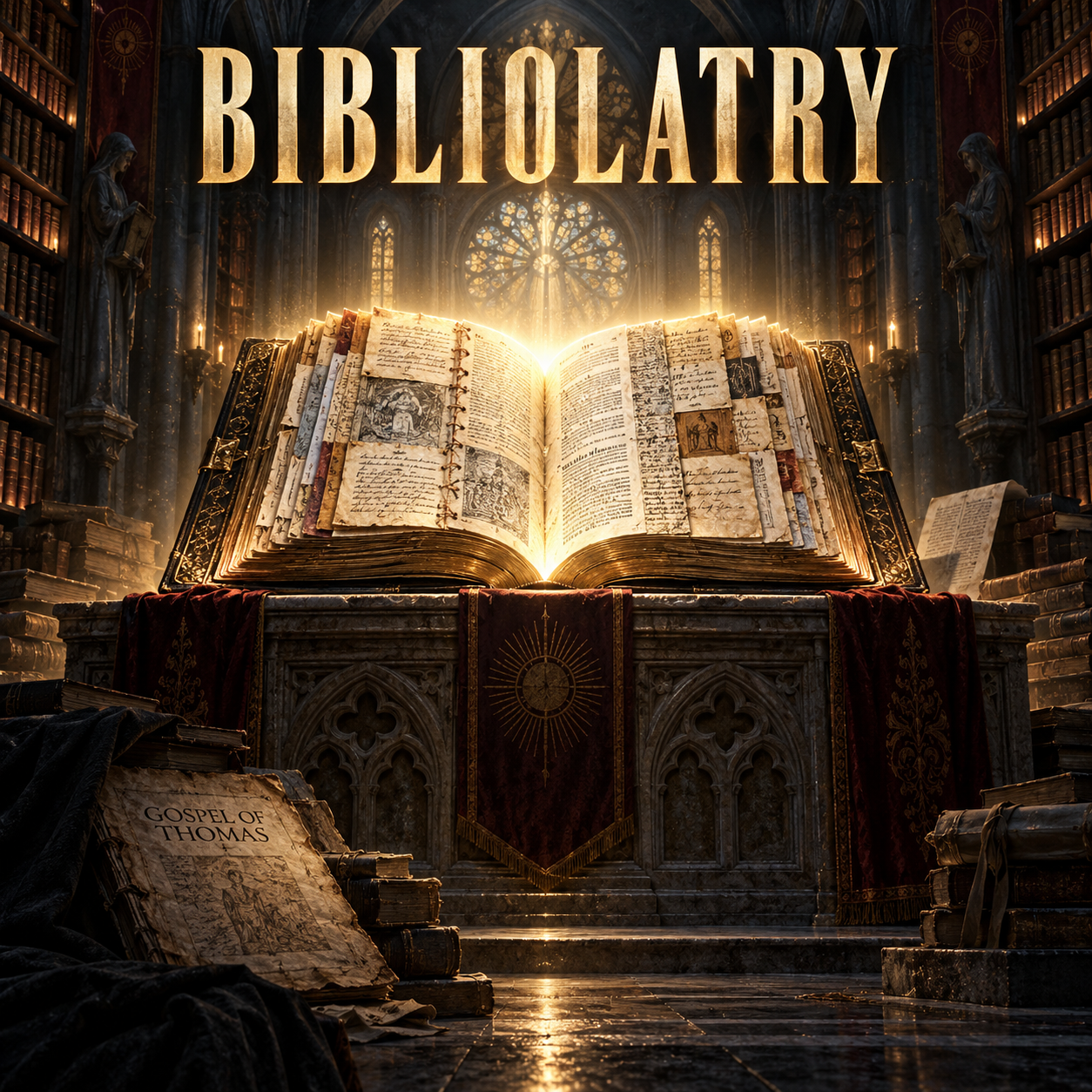
I question why a human library of ancient writings is treated as the flawless, dictated word of God. Contradictions, troubling commands, disputed authorship, excluded gospels, and forgotten voices challenge that certainty. I can value the Bible’s wisdom without worshiping the book or ignoring the humanity within its pages and history.
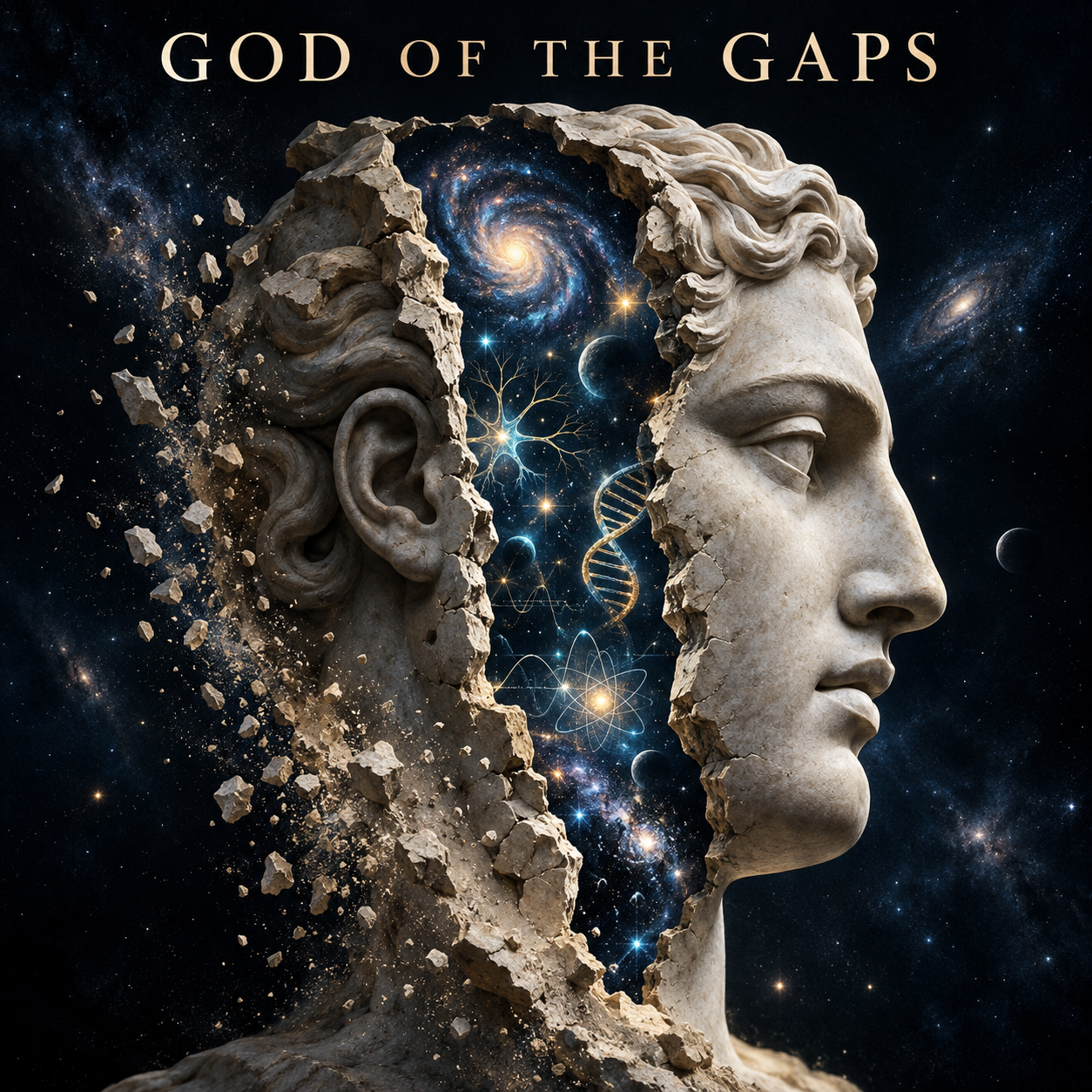
I once placed God wherever knowledge ended—in lightning, storms, disease, and life’s mysteries. But as science explains more, those sacred gaps keep shrinking. New discoveries reveal deeper unknowns, yet ignorance is not evidence. I choose wonder without pretending certainty, allowing mystery to inspire questions instead of ending them prematurely.

I confront the brutal truth of natural selection: survival is not gentle, fair, or merciful. For billions of generations, predators devoured prey, the weak were eliminated, and countless creatures suffered. Nearly every species that evolved is now extinct. I marvel at life’s creativity while grieving the cruelty that shaped it.
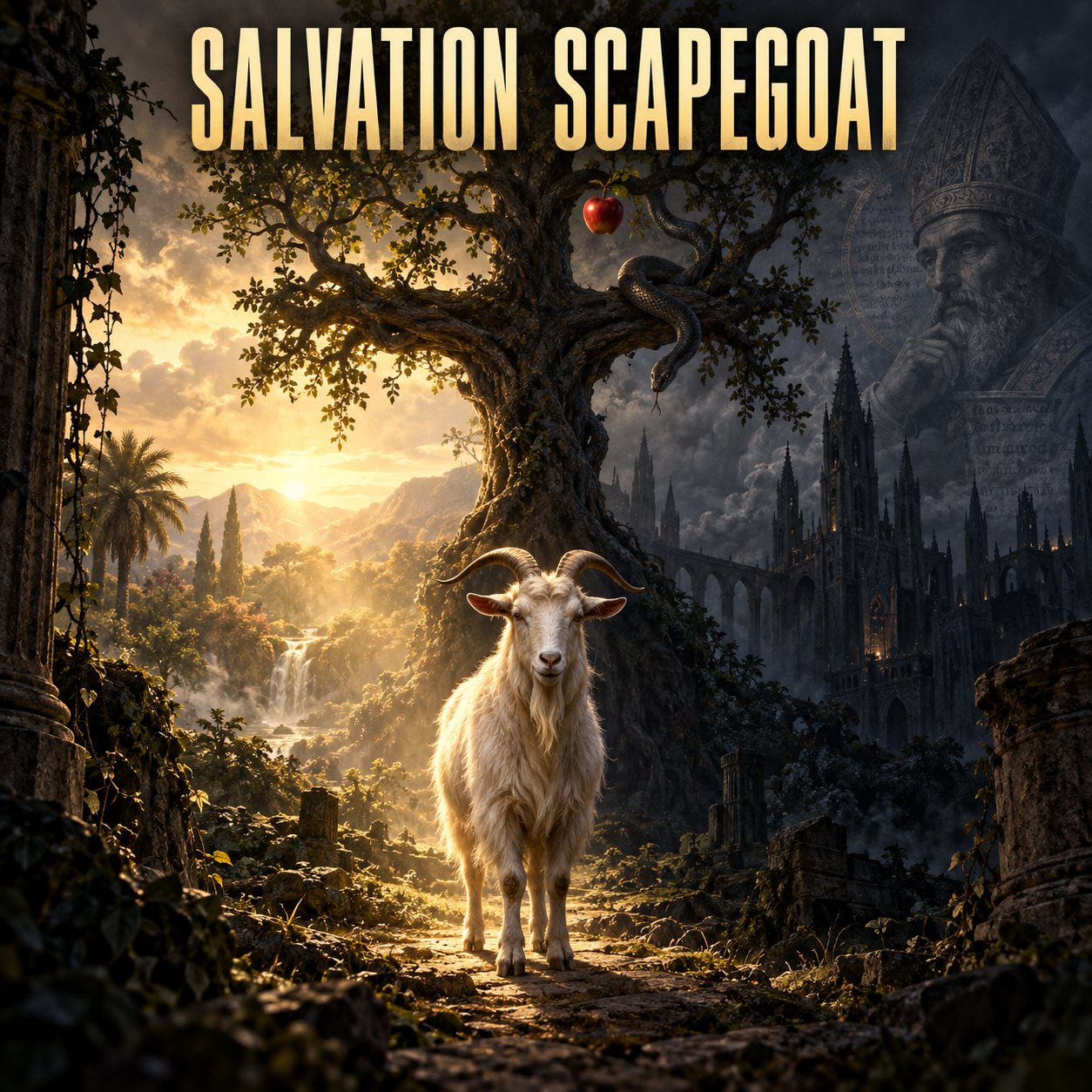
I question a salvation built upon transferring my guilt to an innocent sacrifice. From ancient scapegoats to the cross, punishment is redirected and called justice. But can another’s suffering truly erase my wrongdoing? I seek redemption through responsibility, repair, forgiveness, and transformation—not blood payment for debts I should face.

I dare to question whether my faith reveals truth or reflects what I want to believe. Culture, fear, authority, and confirmation bias may shape my certainty. Instead of defending comforting answers, I examine my mind honestly. If I am deluded, only courageous doubt can help me discover what is real.
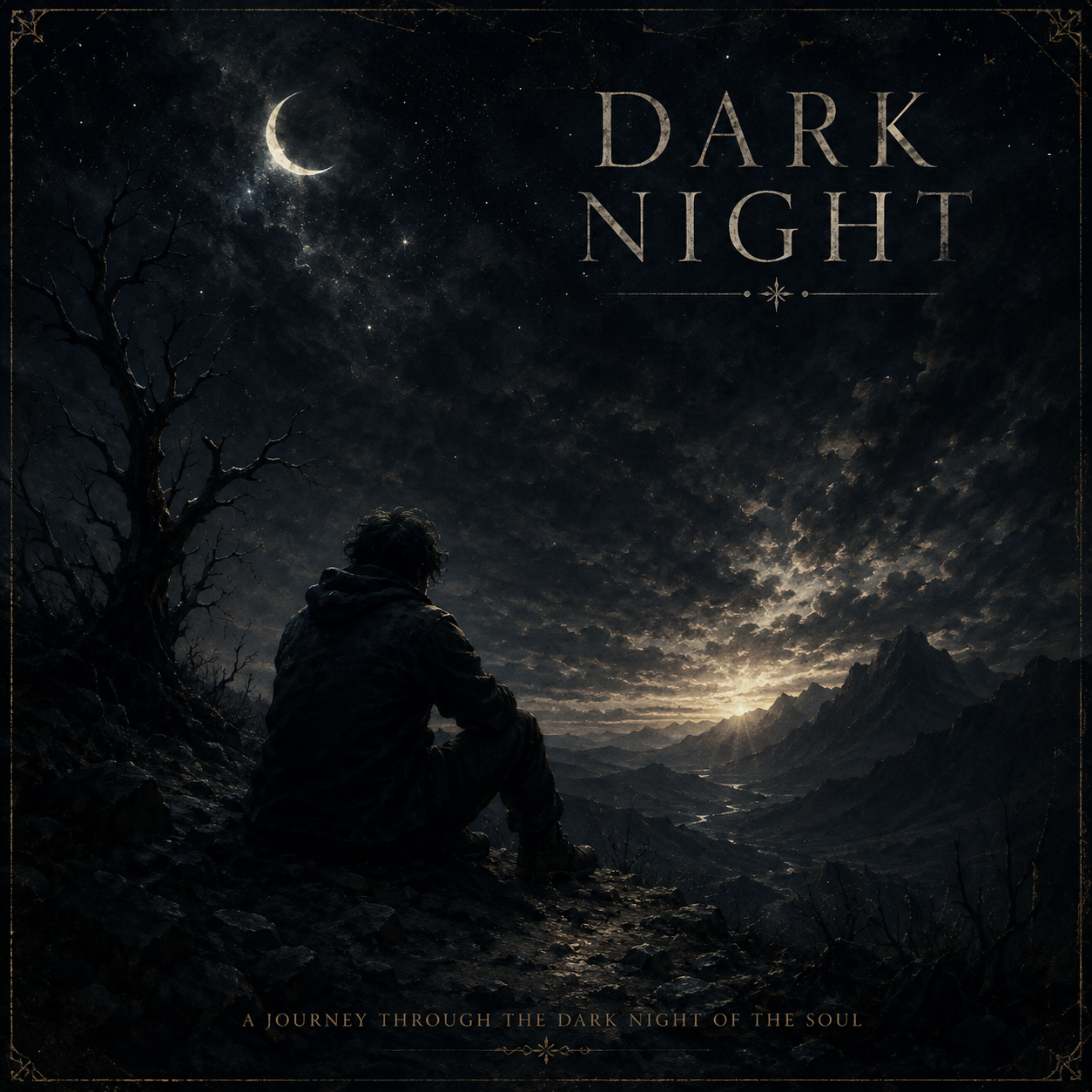
I enter a dark night where certainty disappears, prayers echo unanswered, and the faith that once held me begins to dissolve. Fear, grief, and loneliness surround me, yet I keep walking. In the silence, I release borrowed answers and slowly discover an honest light emerging from within the darkness itself.
Act III — Reconstruction

For a long time, I lived inside beliefs that protected me but also kept me small. Questioning felt like losing everything, yet the walls began to open. I am not who I was, and I am not finished becoming. This is the time to leave the darkness, unfold wings, and emerge.

I ask whether God created humanity in his image, or humanity created gods in ours. Across cultures, deities resemble the people who imagine them, reflecting their values, fears, hierarchies, and hopes. I examine religion as revelation and human invention, wondering whether heaven mirrors eternity or simply reflects ourselves back upward.
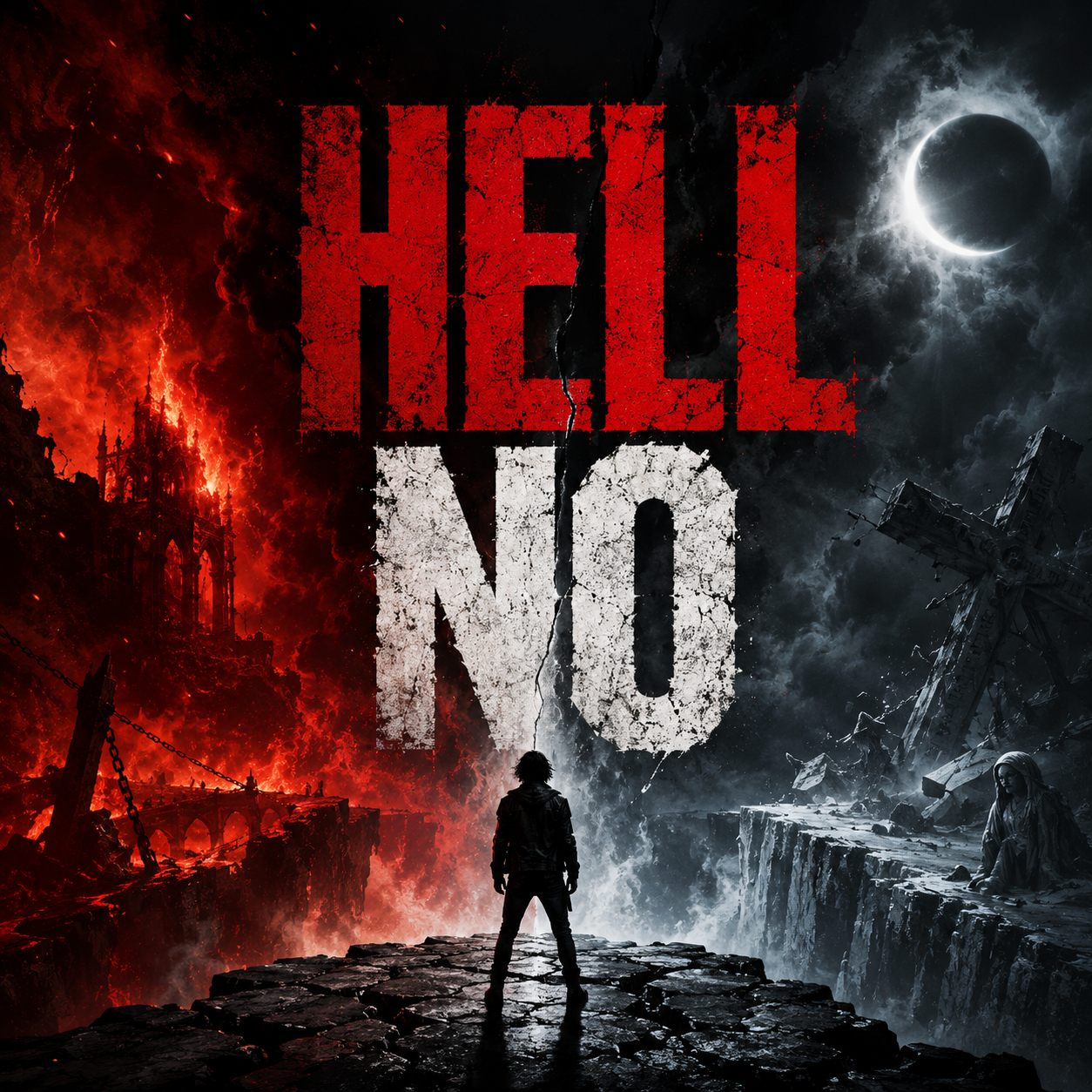
Fear of hell once controlled my questions, choices, and imagination. I now see Hell as an abomination created by religion to control its followers. Now I confront that doctrine and refuse its cruelty.
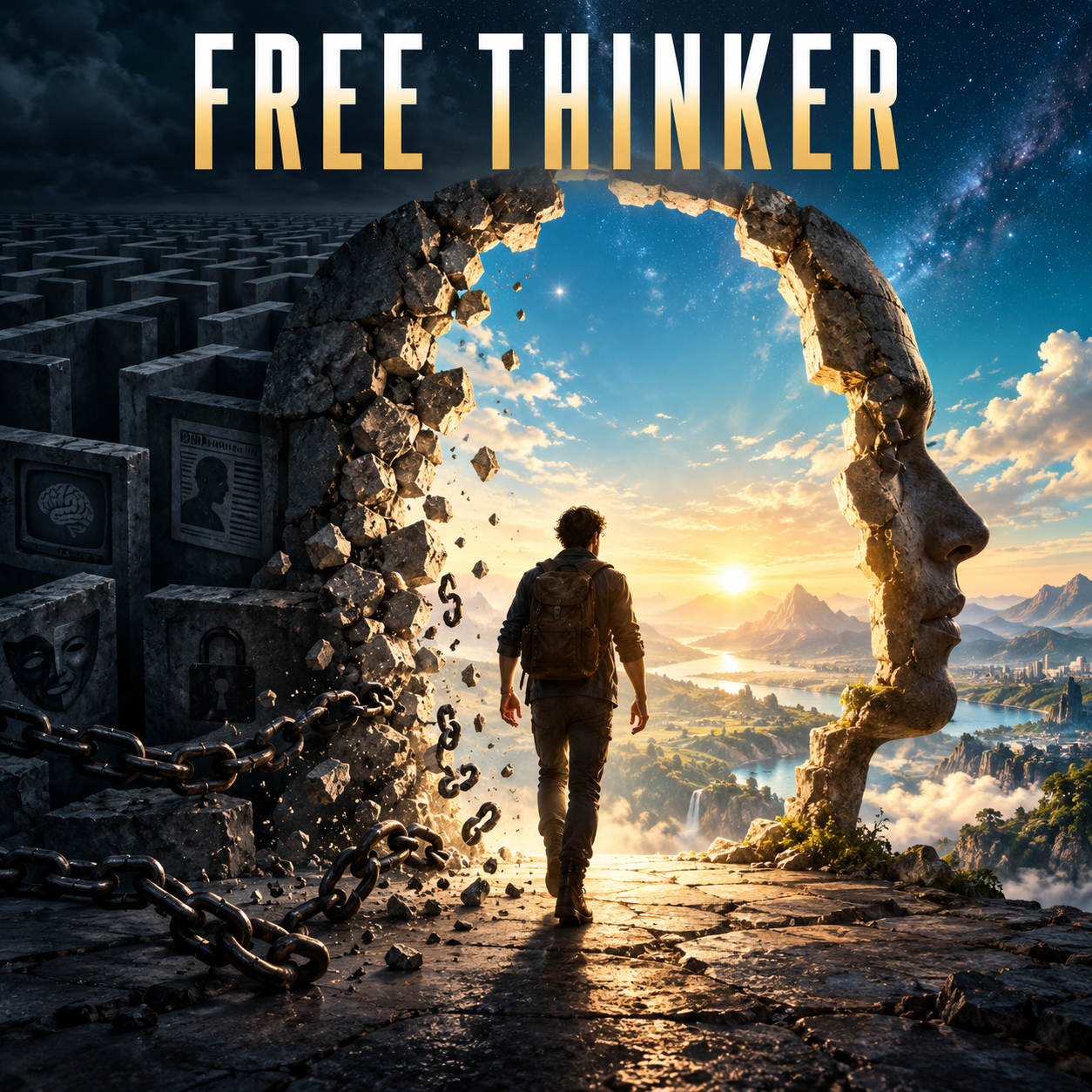
I claim the freedom to question every authority, tradition, and inherited belief, including my own. I follow evidence rather than fear, belonging, or approval. Being a free thinker does not mean rejecting everything; it means remaining curious, humble, and willing to change my mind when better reasons emerge before me.
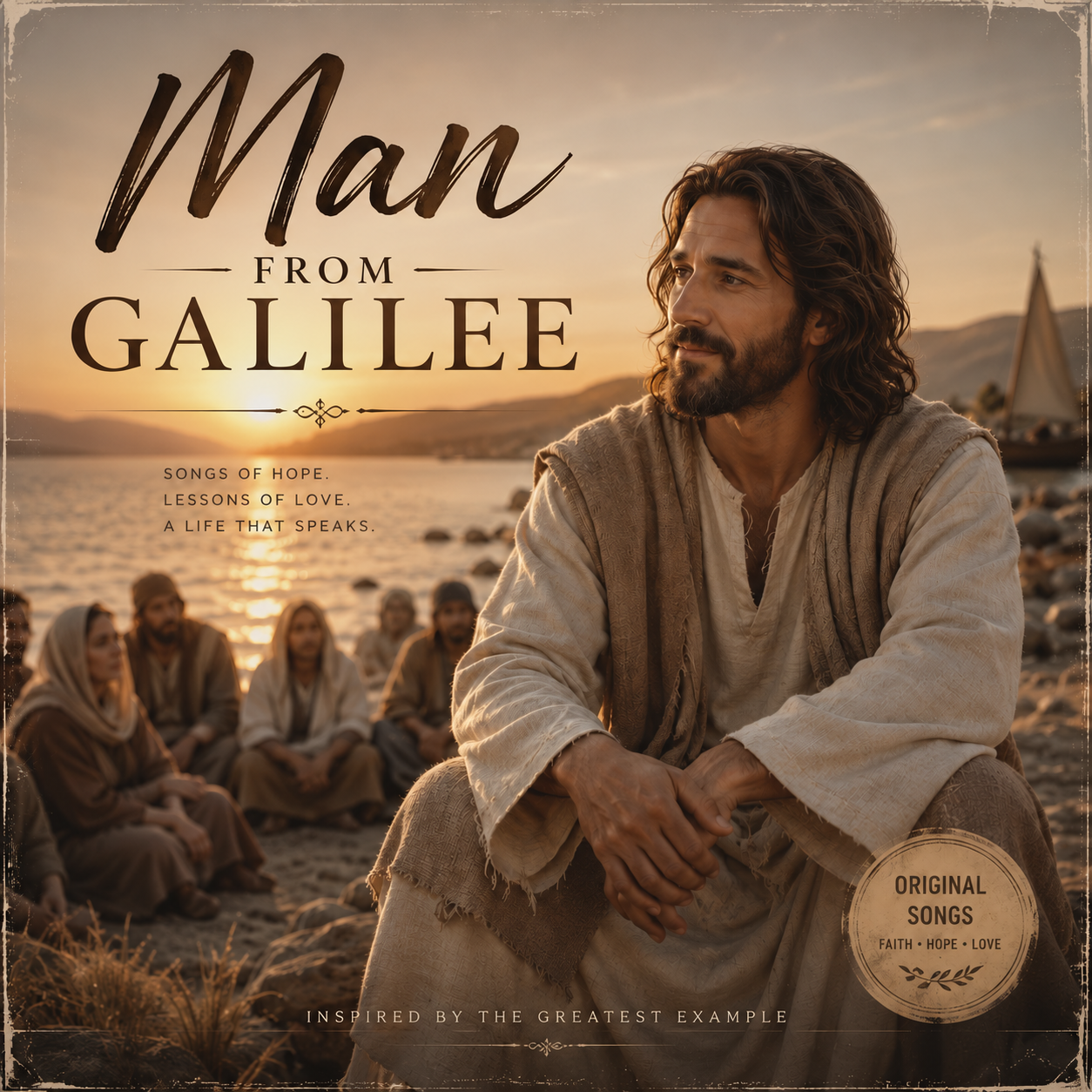
I look beyond doctrine to meet the man from Galilee: a teacher of compassion, courage, forgiveness, and radical love. Churches built creeds around him, yet his humanity still speaks. I question miracles and divine claims, but remain moved by his challenge to love outsiders, confront hypocrisy, and serve others selflessly.

For too long, fear shaped my faith—fear of doubt, rejection, judgment, and hell. It kept me obedient, but it never made me whole. If God is love, then love should lead me toward courage, compassion, and truth. I am choosing a different path from now on: love, not fear.

I follow curiosity beyond the boundaries of inherited belief, asking questions others warned me to avoid. Each answer opens another door, revealing how much I do not know. Curiosity unsettles certainty, but it also awakens wonder. I would rather risk uncomfortable truth than protect a comfortable illusion from honest examination.
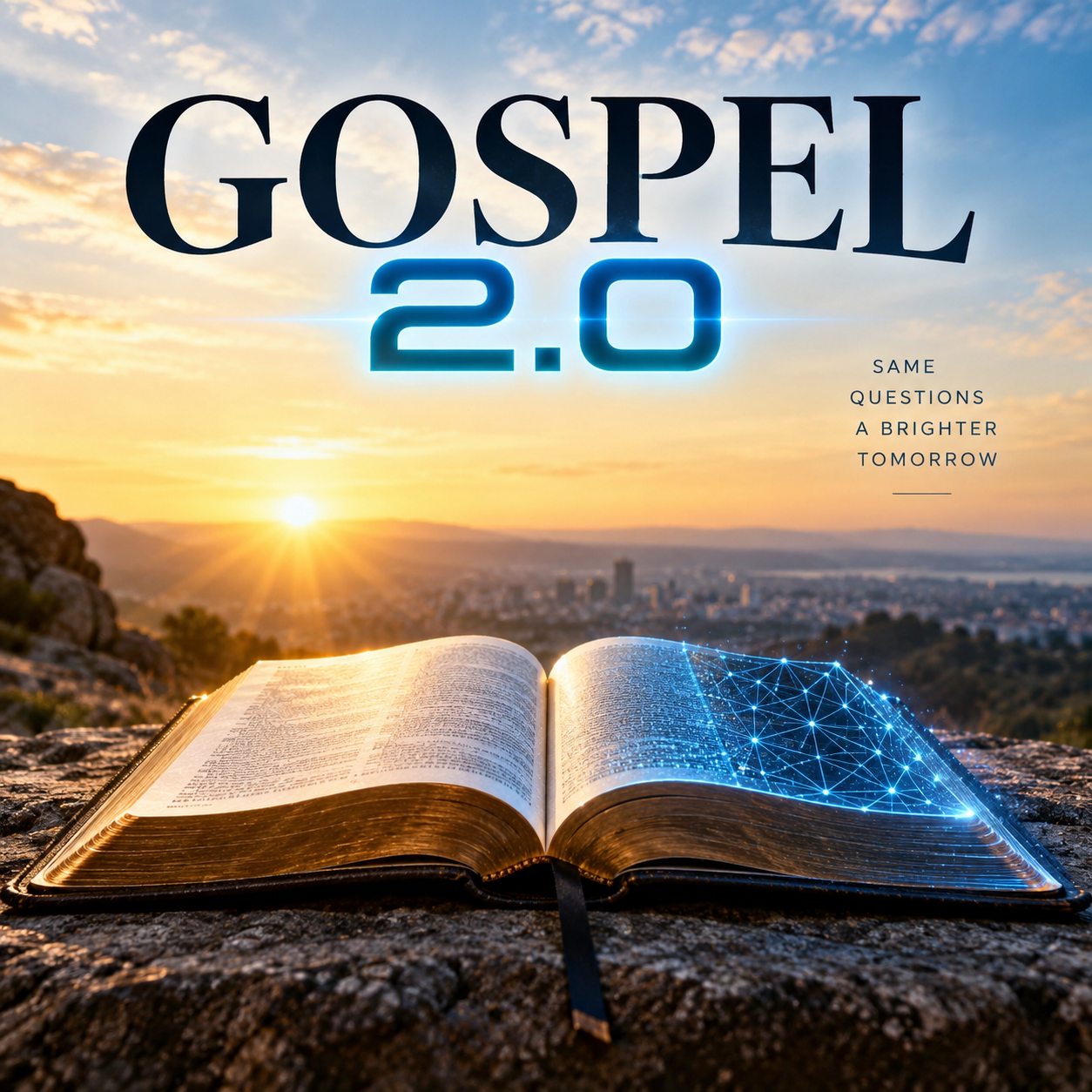
I inherited a gospel shaped for another age—filled with ancient language, rigid doctrines, and answers that no longer reach me. Yet the heart of the message still calls: love deeply, seek truth, serve others, and forgive freely. Maybe faith does not need abandoning. Maybe it needs an honest upgrade.
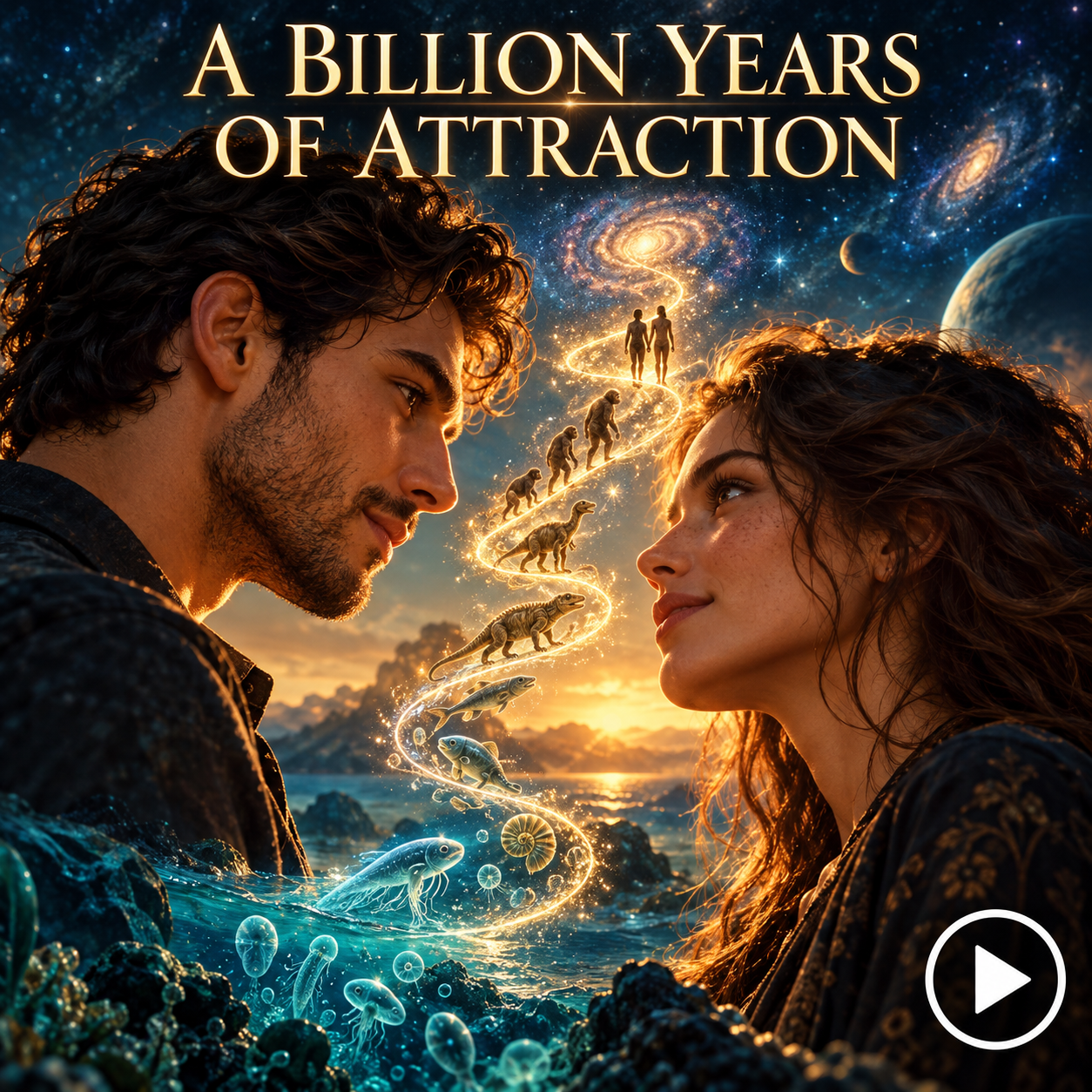
“A Billion Years of Attraction” connects a moment to life’s ancient history. A captivating gaze and every curve awaken a pull shaped over countless generations. Yet the song finds beauty in personality, trust, and mutual choice. Evolution brought two people together; what they make of that attraction belongs to them.
Epilogue
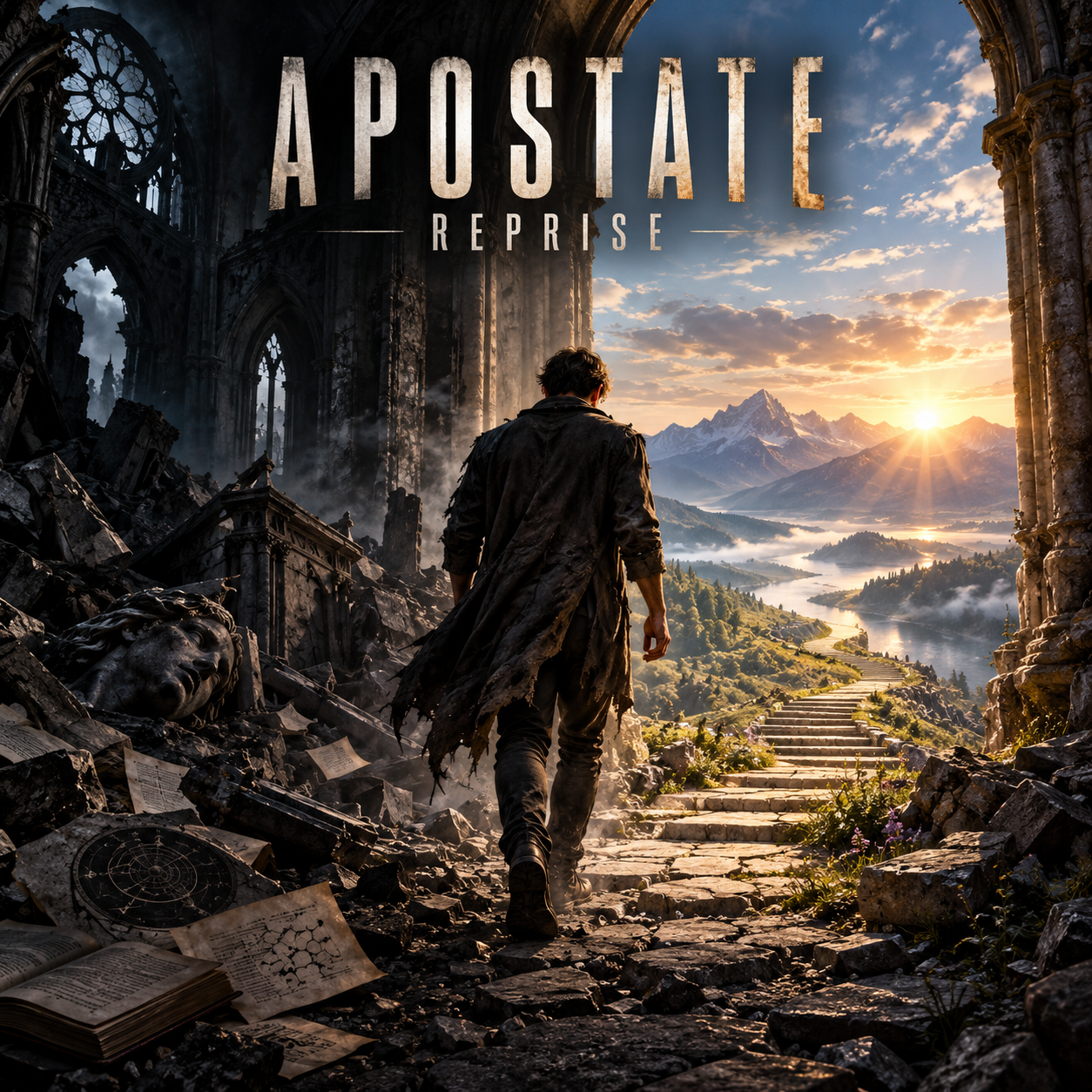
I began with faith, but questions awakened fear and drove me to investigate. What I believed collapsed, yet truth rose from the ruins. I rebuilt meaning through reason, wonder, love, and courage. I emerge transformed—not empty or lost, but free to live honestly and follow truth wherever it leads.